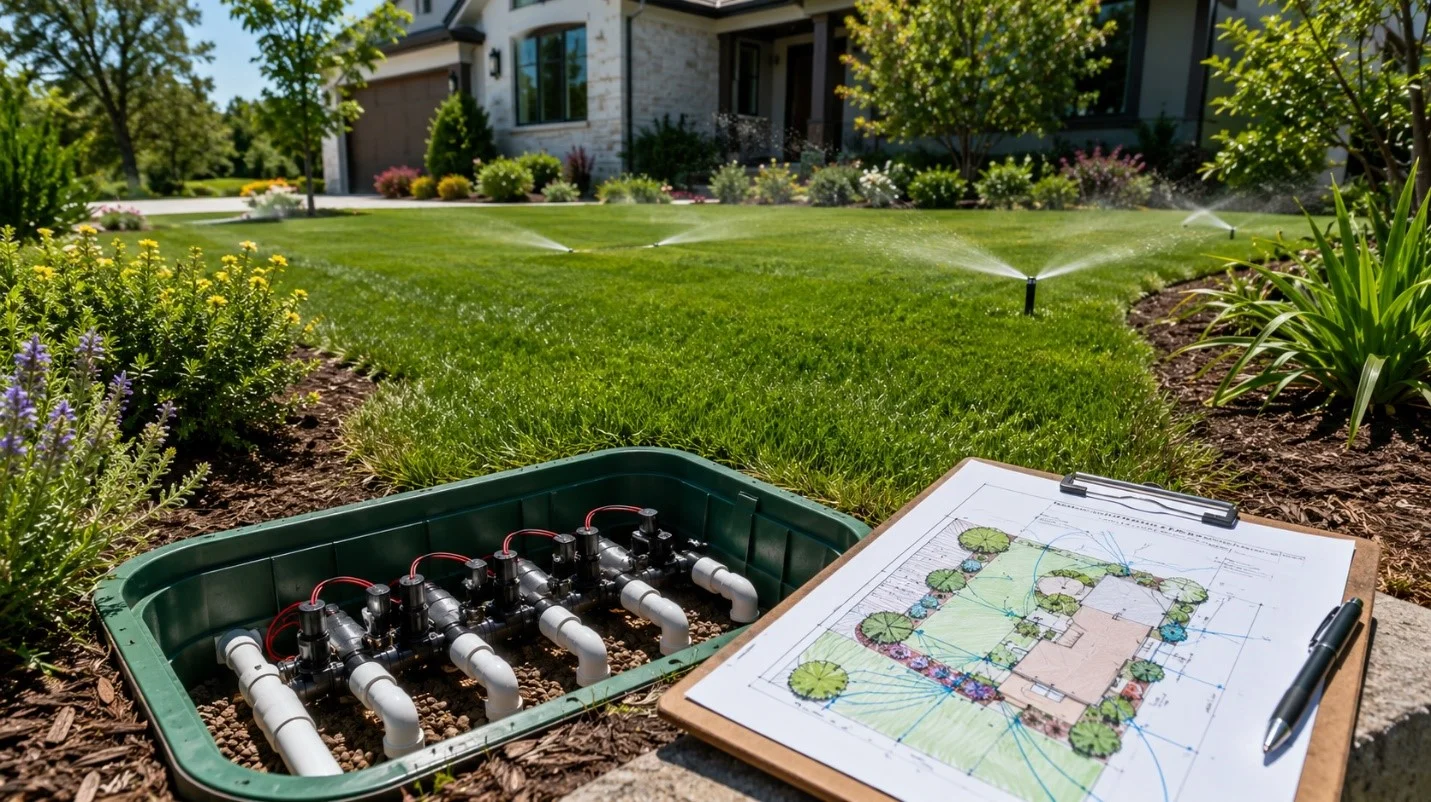
When it comes to healthy landscapes, irrigation design is one of the most important parts of planning. Whether it is a home garden, a commercial lawn, a sports field, or a large planting area, water must reach the right place at the right time. A landscape may have beautiful plants, rich soil, and quality materials, but without a proper watering plan, it can quickly become dry, weak, or uneven. Irrigation is not only about installing pipes and sprinklers; it is about creating a smart system that supports plant health, saves water, and reduces long-term maintenance problems. A good irrigation plan works like a roadmap, showing where water should go, how much to deliver, and how often each area needs it.
Why Irrigation Design Is Important
Every Landscape Has Different Watering Needs
Irrigation design matters because every landscape has different watering needs. A small residential lawn does not need the same setup as a large commercial property, and flower beds need less water than turfgrass.
Soil and Site Conditions Matter
Clay soil holds water longer, while sandy soil drains faster. If these details are ignored, the system may overwater some areas and underwater others, causing brown patches, soggy soil, weak roots, plant disease, and higher water bills.
Better Planning Builds Client Trust
A well-designed system considers area size, plant type, water pressure, slope, soil condition, and maintenance access, helping contractors build client trust, reduce repairs, avoid complaints, and deliver healthier landscapes for years.
Main Parts of a Good Irrigation Design
A successful irrigation system is made of connected parts, and each one matters. Controllers manage watering schedules; pipes and tubing move water; sprinklers, emitters, and drippers apply water; fittings keep parts joined; filters prevent clogging; and rain sensors stop unnecessary watering. A common mistake is choosing products before studying the site. First, check water availability, sun, shade, plants, and maintenance needs. Budget also matters, and an irrigation cost estimator helps compare sprinklers, drip lines, controllers, valves, pipes, and labor before starting.
Drip Irrigation System: A Smart Choice for Water Efficiency
A drip irrigation system is one of the most efficient ways to water plants because it delivers water slowly and directly to the root zone. This helps reduce evaporation, runoff, and water waste. It is useful for garden beds, flower beds, shrubs, hedges, vegetable gardens, and delicate plants. The biggest benefit is control, as each plant receives water where it needs it most. However, proper design is still important. Emitters need correct spacing, tubing should sit near plants, filters prevent clogging, and pressure must be managed.
Sprinklers, Controllers, and Smart Watering
Sprinklers are common for lawns and larger open spaces. Pop-up sprinklers work well in residential landscapes because they stay hidden when not in use, while rotor sprinklers suit larger areas with steady water coverage. Controllers act like the brain of the irrigation system, deciding when watering starts, how long each zone runs, and how often it happens. Smart controllers adjust watering based on weather, while rain sensors stop unnecessary watering after rainfall.
Why Irrigation Classes Are Helpful
For contractors, property managers, and serious DIY homeowners, irrigation classes can be very useful. Irrigation may seem simple, but there is a lot to understand for long-lasting results. Classes teach water pressure, pipe sizing, sprinkler spacing, drip irrigation layout, controller programming, backflow prevention, maintenance, and troubleshooting. They also help reduce costly mistakes, such as mixing spray heads and rotors in the same zone, installing too many heads on a single valve, forgetting to install filters in a drip system, or placing valves poorly. For landscape contractors, better education improves professionalism, builds client trust, and helps explain system choices, water savings, and future maintenance.
Common Irrigation Design Mistakes to Avoid
Rushing the Planning Stage
Poor irrigation design usually starts with rushing the planning stage. One common mistake is watering every area the same way, even though a shaded garden bed and a sunny lawn do not need the same schedule.
Ignoring Soil Type and Poor Zoning
Another mistake is ignoring soil type. Clay soil may cause runoff if water is applied too quickly, while sandy soil can drain moisture before roots use it. Poor zoning is also an issue because turf should not usually be in the same zone as drought-tolerant shrubs, and flower beds may need a different schedule than trees.
Forgetting Maintenance Access
Maintenance access is often forgotten. Valve boxes, filters, and controllers should be easy to reach, because hidden parts make future repairs frustrating and expensive.
Conclusion
Irrigation design is more than a technical plan. It is the foundation of a healthy, efficient, and long-lasting landscape. A well-designed system delivers water exactly where it is needed, saves money, protects plants, and reduces waste. Whether the project uses sprinklers, smart controllers, or a drip irrigation system, the goal is better watering with less effort and fewer problems. Using an irrigation cost estimator helps plan the budget, while irrigation classes improve knowledge and reduce installation mistakes. For homeowners, contractors, and property managers, smart irrigation planning helps landscapes grow stronger, greener, and healthier.
FAQs
What is irrigation design?
Irrigation design is the process of planning how water is delivered to lawns, plants, gardens, or commercial landscapes using the right pipes, valves, sprinklers, drip lines, controllers, and watering zones.
Is a drip irrigation system better than sprinklers?
A drip irrigation system is better for garden beds, shrubs, and direct root watering, while sprinklers are usually better for lawns and wide-open areas.
What does an irrigation cost estimator do?
An irrigation cost estimator helps calculate materials, labor, system size, and installation costs before starting.
Are irrigation classes worth it?
Yes, irrigation classes help contractors, landscapers, and DIY homeowners understand design, installation, maintenance, and water-saving methods.
How can irrigation design save water?
It reduces runoff, overspray, evaporation, leaks, and overwatering.